Agentic AI · E-commerce
Margin
Retail arbitrage, end to end.
A single-operator Amazon arbitrage engine: it watches retailer prices, matches them to Amazon listings, computes the true landed margin, and ranks what's actually worth buying.
- Role
- Solo — research & engineering
- Year
- 2026
- Built with
- Python · FastAPI + HTMX · Amazon SP-API · Keepa · SQLAlchemy · Resend / Slack
How it works
Ingest
Pull clearance prices from seven source retailers and match each to an Amazon ASIN.
Rank
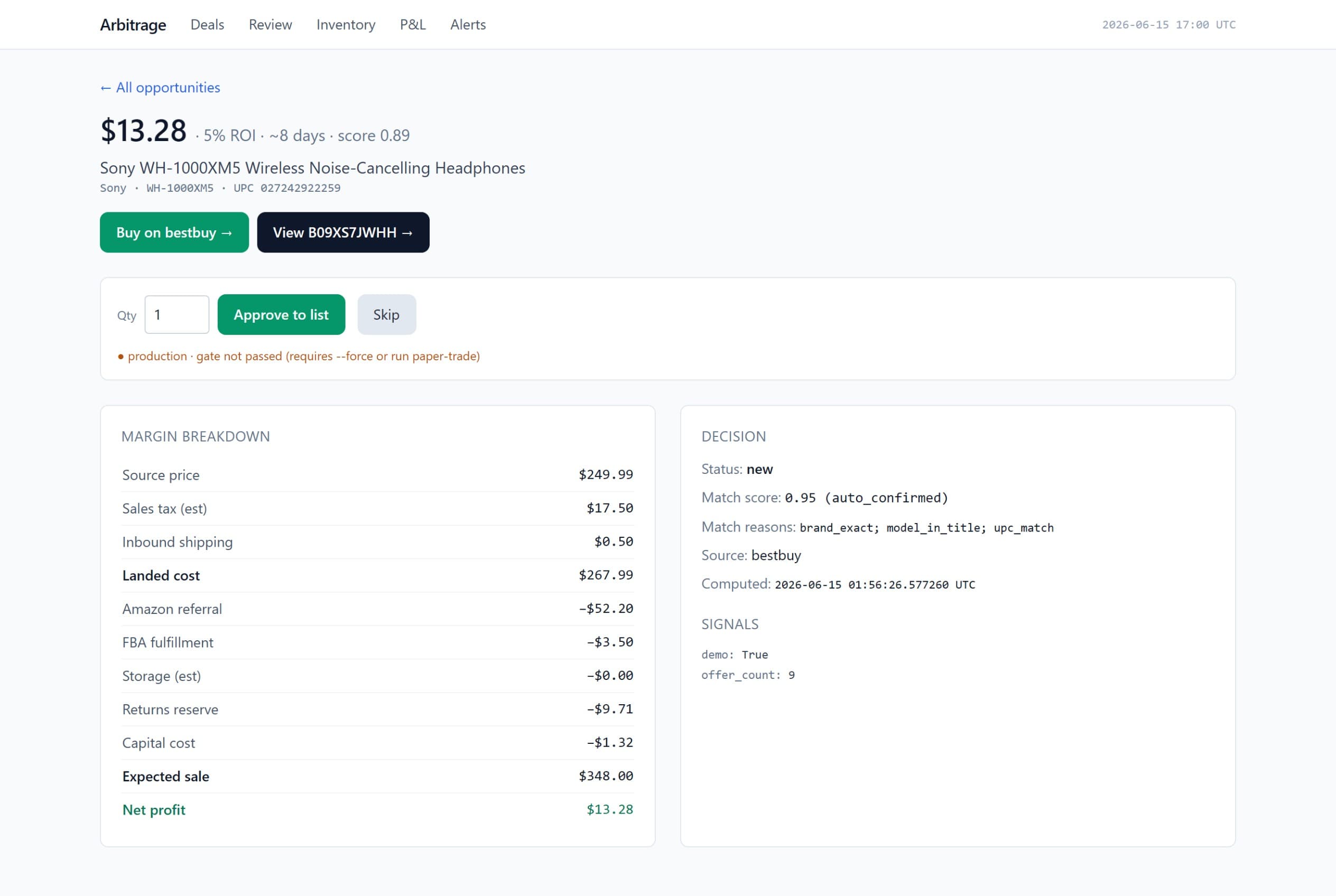
Compute true landed margin — every fee, storage, returns, capital cost — and rank by cash velocity.
List
On your approval it auto-lists via Amazon's API. The buy stays manual, by design.
The problem
Online arbitrage is a margin illusion: a price gap looks like profit until Amazon's referral and FBA fees, storage, returns, and tied-up capital quietly eat it. Finding the few SKUs that actually clear means pricing all of that, across thousands of listings, faster than the deal lasts.
The build
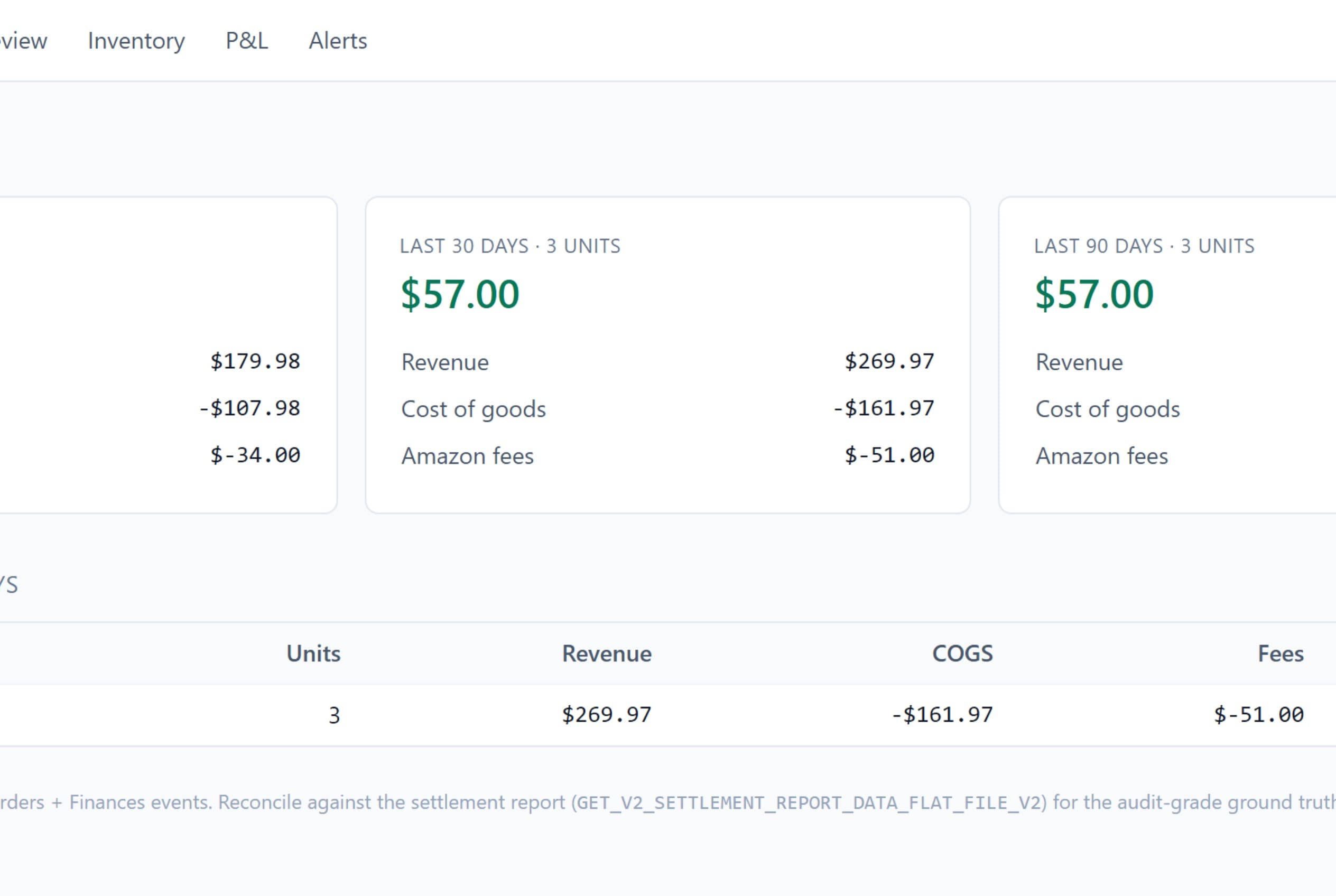
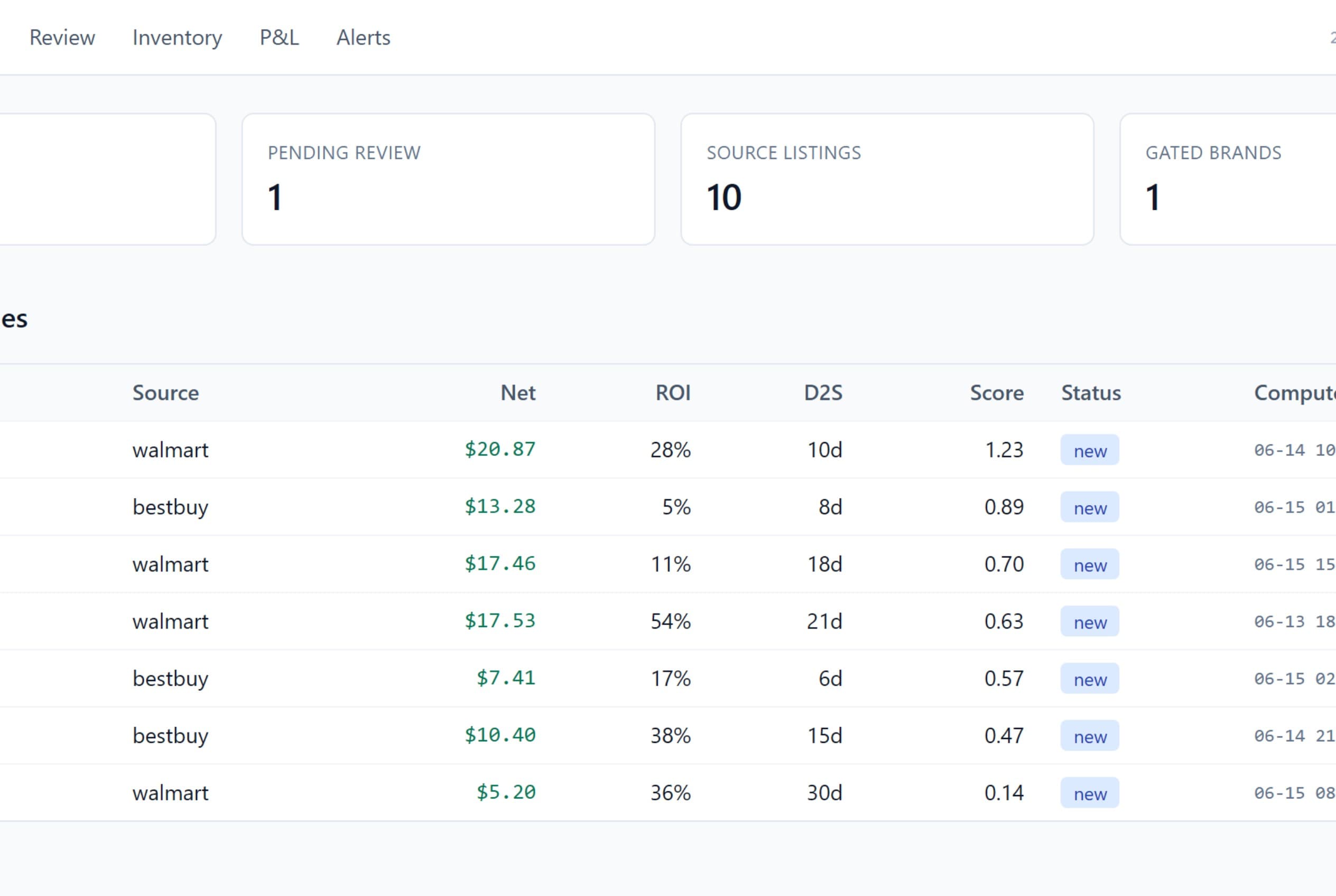
The platform ingests clearance prices from seven source retailers (Best Buy, Walmart, Target, Newegg, Home Depot, Lowe's, B&H), matches each to an Amazon ASIN with a fuzzy verifier and a needs-review queue, computes the true landed margin, and ranks opportunities by cash velocity — net profit ÷ (days-to-sell + lead time). It then syncs Amazon Orders and Finances into a real P&L.
The AI technique
Matching is the AI surface — resolving a messy retailer title to the right ASIN on brand, model, and UPC signals, with a confidence score and a human review queue for the uncertain ones. Everything downstream is deterministic money math, and the one consequential step — listing for sale — happens only on the operator's approval, behind a paper-trade reconciliation gate. The buy leg stays manual by design, a deliberate ToS posture.
The outcome
A single-operator engine that turns 'this looks cheap' into a ranked, fee-accurate buy list with a real downstream P&L — generative matching at the edges, deterministic economics at the core.
A closer look