Generative AI · Kids
Bibo
Say a game. Play a game.
A tablet robot a 6-to-9-year-old talks to. They describe a game out loud; Bibo builds it, and it plays.
- Role
- Solo — product, engineering & safety
- Year
- 2026
- Built with
- Next.js PWA · Phaser 3 · Claude · Deepgram / ElevenLabs · Zod · Dexie
How it works
Talk
A child describes the game they want, out loud.
Build
Claude emits a validated game spec — never code.
Play
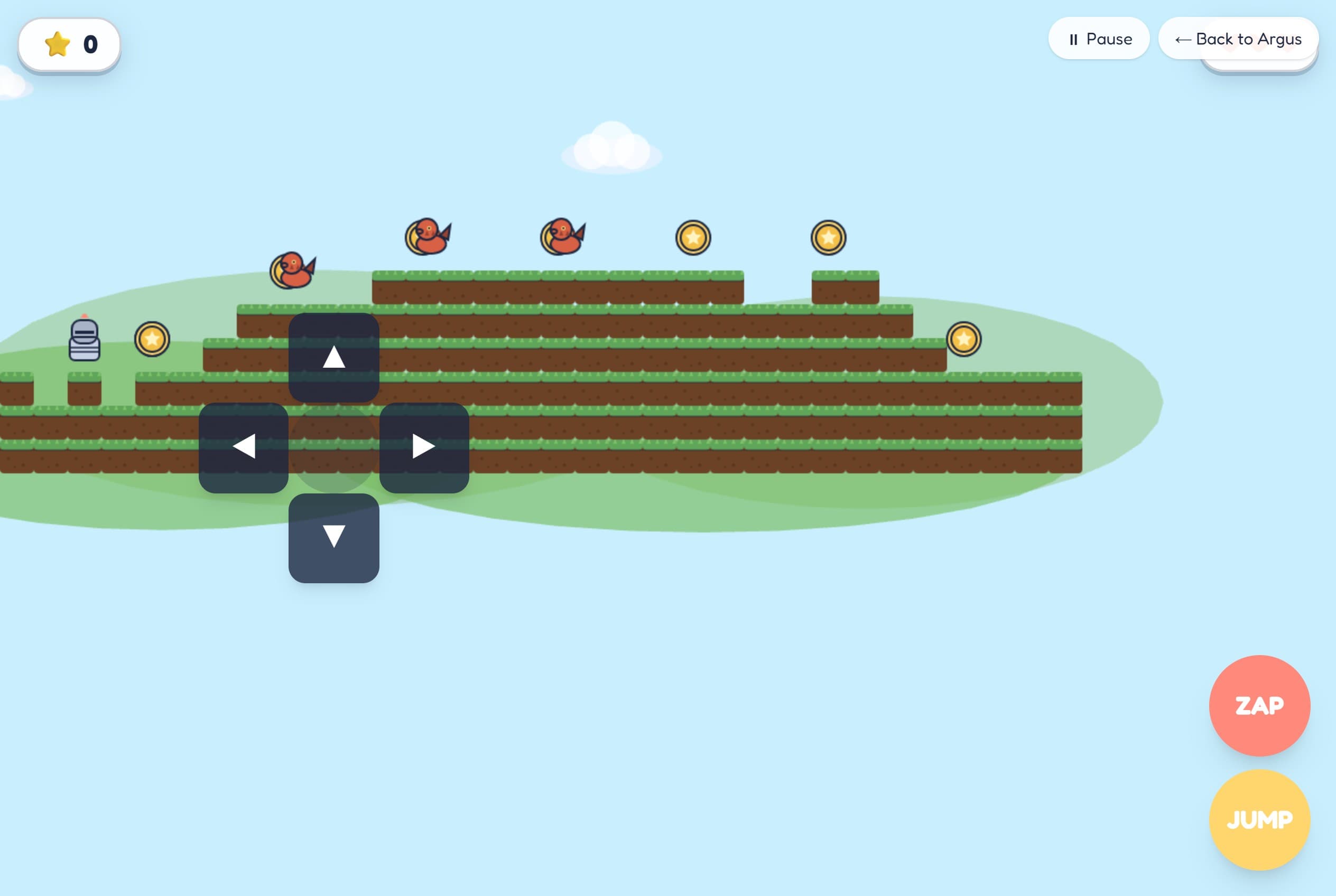
It renders into a real game, right on the tablet.
The problem
Kids brim with game ideas and have no way to make them real — authoring tools are built for adults. And anything that listens to a child has to clear a high bar for safety and privacy before it’s allowed near them.
The build
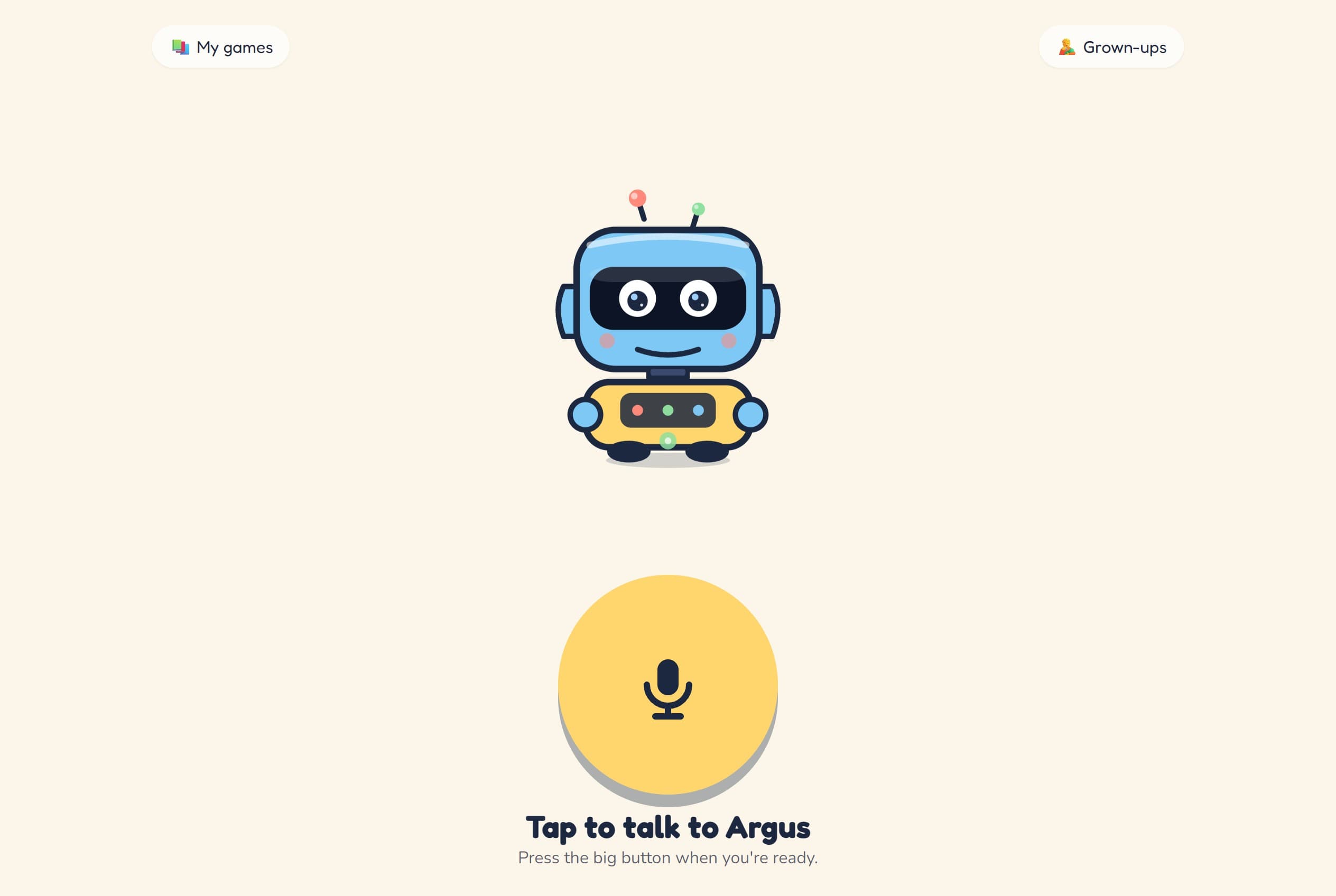
A child taps ’Talk to Bibo’ and describes their game. A voice-driven interview fills a small blackboard — hero, world, goal, baddie — and when it’s done, the idea becomes a real, playable game running in a sandboxed Phaser 3 runtime on the same tablet, with touch controls.
The AI technique
The crucial move: Claude never writes executable code. It emits a strict Game-Spec DSL — a small JSON of behaviors, entities, layout, and win/lose conditions — which is validated with Zod and rendered by a deterministic runtime that was audited once. Generative where it’s magical, deterministic where it must be safe. No PII is collected; a parent gate guards the door; the game sandbox ships with no network permissions.
The outcome
A COPPA-scoped, voice-first creative toy that turns imagination into something playable in a minute — proof that generative AI can be both delightful and rigorously contained.
A closer look